Refractive errors - Myopia (short-sight)
Description
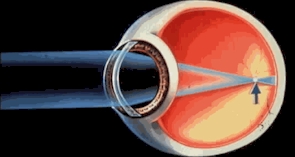 The power of the lenses of the eye to bend light to focus on the retina is excessive, sometimes because the eye is abnormally long. The image is brought to focus in front of the retina, particularly for distance vision which requires less power of focus to be exerted.
Clinical Features
Blurred distance vision, worse as myopia increases
Near vision clearer
Management
Glasses, contact lenses or refractive surgery
Refractive errors - Hypermetropia (long-sight)
Description
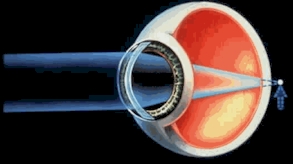 The power of the lenses of the eye to bend light to focus on the retina is inadequate, sometimes because the eye is abnormally short. The image is only brought to focus behind the retina, particularly for near vision which requires extra power of focus to be exerted.
Clinical Features
Blurred vision, especially for near
Headache
Early need for reading glasses
Management
Glasses, contact lenses or refractive surgery
Refractive errors - Astigmatism
Description
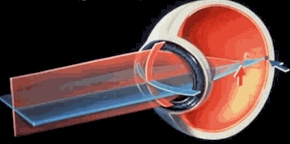 The cornea is not perfectly round, having steeper curvature in one direction than another, similar to a rugby ball compared to a football. The eye does not focus light accurately onto the retina in all planes
Clinical Features
Blurred vision
Management
Glasses, contact lenses or refractive surgery
Refractive errors - Presbyopia
Description
Presbyopia is not related to the shape of the eye but the natural ageing process that the eye undergoes. With age the lens of the eye becomes more rigid and is then less able to change its focus making near vision more difficult
Clinical Features
Distance vision not affected
Near vision becomes more difficult requiring brighter light and/or larger print
Management
By the mid to late 40s most people with normal eyesight start to need reading glasses for close work.
Contact lens to one eye to set for near focus (monovision), and multifocal lens implants or monovision following cataract surgery are alternative options that suit some patients.





